
SHREC2026: Human Perceived Visual Complexity of 3D Shapes
Introduction
The visual complexity of shapes remains an ill-defined concept. While there exists a corpus of literature that examines 2D shape complexity, 3D shape complexity is as of yet a relatively under-studied problem. Furthermore, our understanding of how humans intuitively evaluate complexity in 3D remains limited [1]. The perceptual complexity of a shape is considered to be a multi-faceted construct involving quantitative factors (e.g., number of elements) and structural factors (e.g., symmetries) [2].
[1] Zygmunt P, et al. (2010) New approach to the perception of 3d shape based on veridicality, complexity, symmetry and volume. Vision Research, 50(1):1-11. [doi]
[2] Gartus A, Leder H (2017) Predicting perceived visual complexity of abstract patterns using computational measures: The influence of mirror symmetry on complexity perception. PLOS ONE 12(11): e0185276. [doi]
Important dates
N.B. the following dates remain tentative.- March 31, 2026: Participant submit results for this track, participants must also include a short description of their method, submitted to Roberto Dyke .
- April 20, 2026: This track is finished, and results are included in a track report are submitted for review.
Organisers
- Roberto Dyke
- Post-doc at IRIT
- Yang Deng
- Ph.D. student at Cardiff university
- Charlotte Brassey
- Senior lecturer at Manchester Metropolitan Unxiversity
- Yu-Kun Lai
- Professor at Cardiff University
- Paul L. Rosin
- Professor at Cardiff University
Datasets
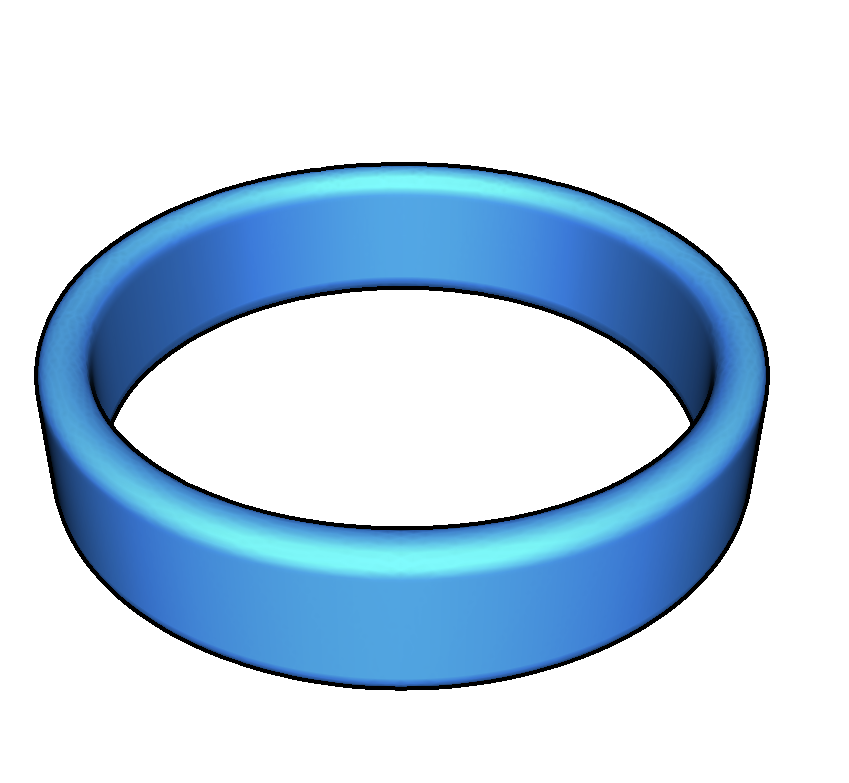
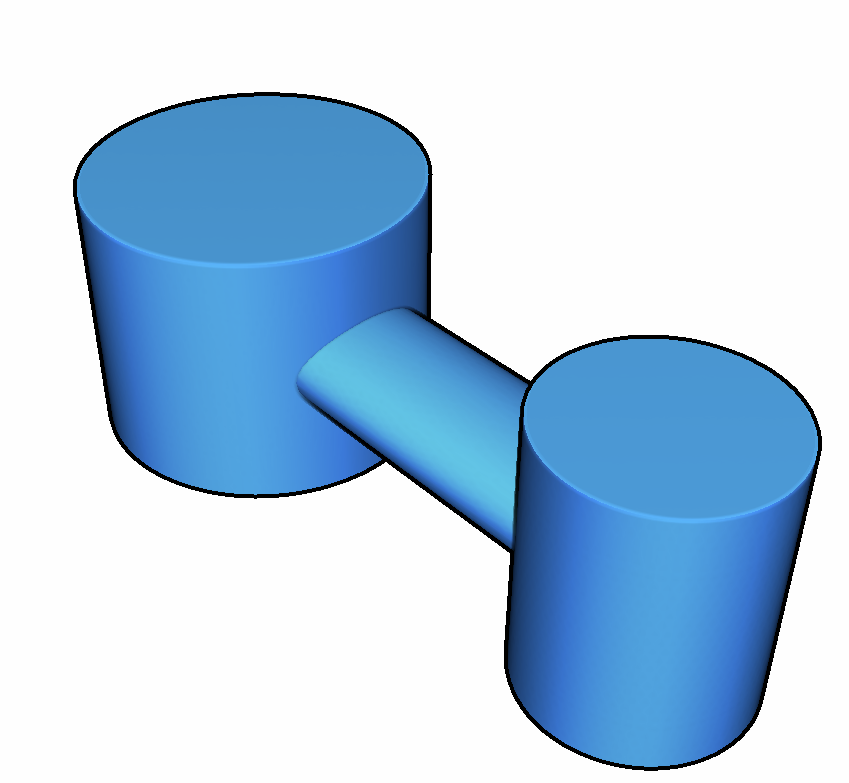
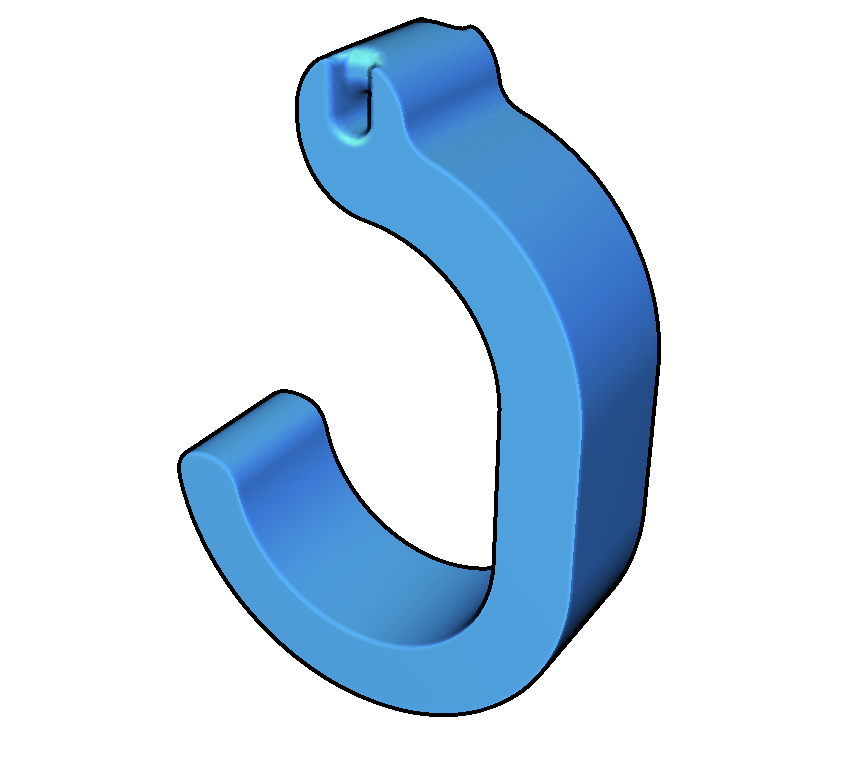
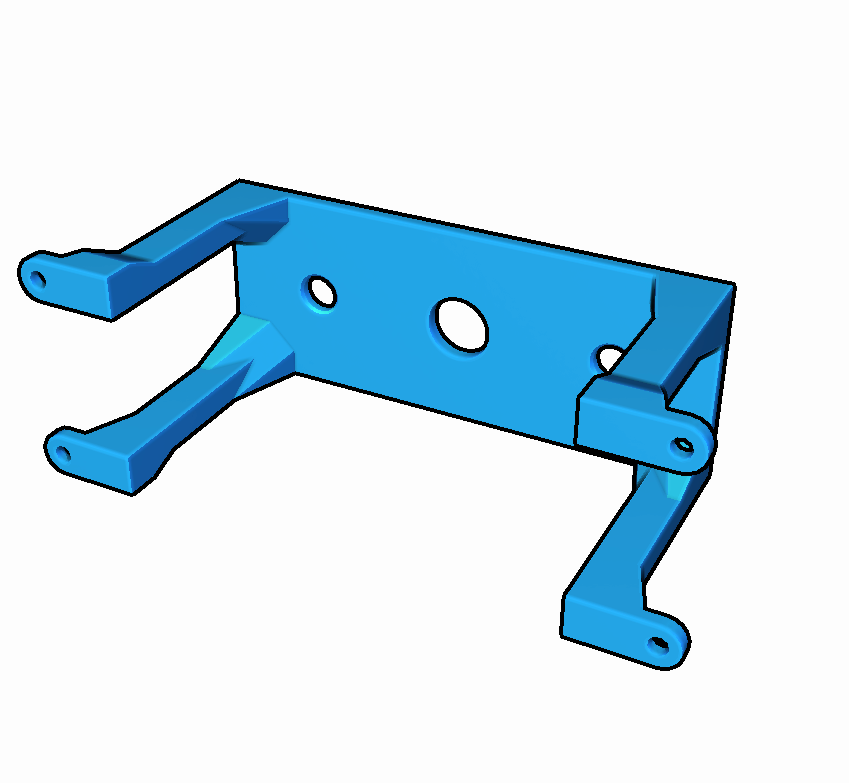
For this track, we have curated three datasets consisting of 3D shapes (a subset of the ABC dataset [3], a primate tooth dataset, and a fractal shape dataset). These have been selected to help assess visual complexity from different angles. This is considered necessary due to the incomplete picture that a single dataset might provide. The ABC dataset is a large, publicly available dataset that contains many CAD shapes of varying complexity. The primate tooth dataset contains approximately 70 samples which have been attributed with an expected level of complexity by an expert in the field of zoology. Finally, the fractal shape dataset consists of publicly available models. Two independent user studies were performed on the ABC and fractal datasets. In each study (except for the tooth dataset), users were shown pairs of samples from the given dataset and asked to evaluate their visual complexity using the two-alternative forced choice (2AFC) method.
[3] Sebastian K, et al. (2019) ABC: A big CAD model dataset for geometric deep learning. In Proceedings of the IEEE/CVF conference on computer vision and pattern recognition, pages 9601-9611. [doi]
ABC
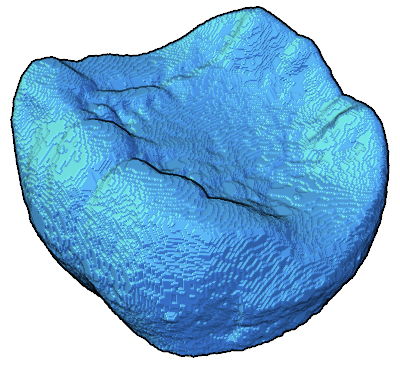
Primate tooth
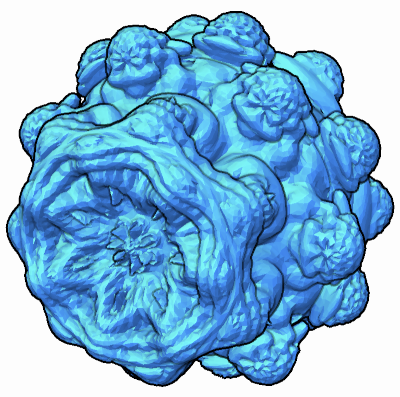
Fractal
Download
Each dataset consists of a set of 3D meshes. For 2D-based methods, multi-view silhouettes are also available.
ABC dataset The dataset can be automatically downloaded from the NYU website using the provided Python download script. Instructions on how to use it are included in the README file. To download the dataset, there is an initial 7.4GB and 6.6GB download. A subset of the files is then extracted totalling 885MB.
Primate tooth dataset The dataset can be automatically downloaded from the MorphoSource website using the provided Python download script. Instructions on how to use it are included in the README file. The dataset is 1.3GB and takes approximately 15 minutes to download.
Fractal dataset The dataset is directly available from this webpage in the table below.
| Dataset | 3D models | 2D silhouettes |
|---|---|---|
| ABC dataset | Python download script | Download [52MB] |
| Primate tooth dataset | Python download script | Download [14MB] |
| Fractal dataset | Download [97MB] | Download [6MB] |
Tasks
Participants are to predict a ranking of increasing complexity of the shapes in each of the proposed datasets independently. Along with their results, participants will be asked to submit a description of the method used. Participants should mention any changes made to internal parameters between datasets.
Submission
For each dataset, a file containing all requisite shapes ordered by increasing complexity should be produced. The results along with a description of the method applied should be emailed to the track organizers (Roberto Dyke ).
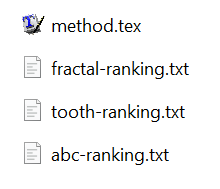
Submission files
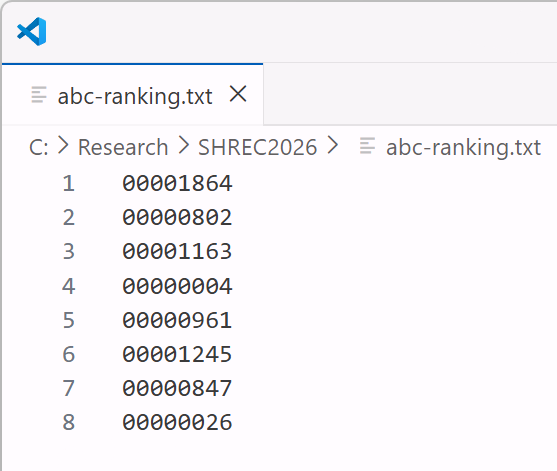
Ranking file contents
In this example, Line 1 corresponds to the shape with the lowest visual complexity.